
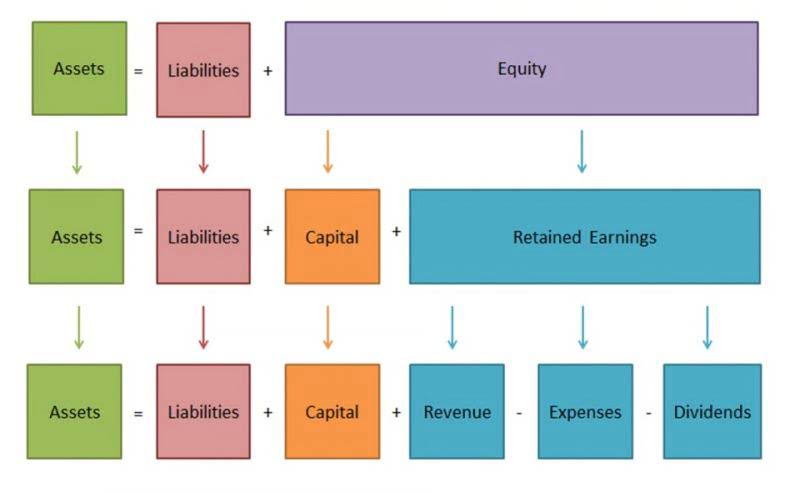
Are the value of your assets and liabilities now zero because of the start of a new year? Your car, electronics, and furniture did not suddenly lose all their value, and unfortunately, you still have outstanding debt. Therefore, these accounts still have a balance in the new year, because they are not closed, and the balances are carried forward from December 31 to January 1 to start the new annual accounting period. Let’s say your business wants to create month-end closing entries.
- They include assets, liabilities, and equity and carry over their balances to the next period.
- Now, if you’re new to accounting, you probably have a ton of questions.
- Next, transfer all expense account balances to the income summary account.
- The final step in the merchandising accounting cycle would be to prepare a post-closing trial balance.
- We are going to go over these at a high level and then jump into each step individually.
- The use of closing entries resets the temporary accounts to begin accumulating new transactions in the next period.
Closing Entries in Accounting
It will debit Retained Earnings for $5,000 and credit Dividends for $5,000, reducing equity by the amount paid out. They provide crystal-clear financial insight, akin to high-definition glasses for your ledger, allowing you to detect trends, issues, and opportunities with unparalleled clarity. Notice that the Income Summary account is now zero and is readyfor use in the next period. The Retained Earnings account balanceis currently a credit of $4,665. Let’s closing entries explore each entry in more detail using Printing Plus’sinformation from Analyzing and Recording Transactions and The Adjustment Process as our example.

Send Me Accounting for Everyone Weekly Updates
Closing entries are entries used to shift balances from temporary to permanent accounts at the end of an accounting period. These journal entries condense your accounts so you can determine your retained earnings, or the amount your business has after paying expenses and dividends. Creating closing Cash Flow Management for Small Businesses entries is one of the last steps of the accounting cycle. Closing entries, also called closing journal entries, are entries made at the end of an accounting period to zero out all temporary accounts and transfer their balances to permanent accounts. In other words, the temporary accounts are closed or reset at the end of the year. The timing of closing entries is crucial for ensuring accurate financial reporting.
Can You get paid to go to college?

Because this is a positive number, you will debit your income summary account and credit your retained earnings account. You need to create closing journal contribution margin entries by debiting and crediting the right accounts. Use the chart below to determine which accounts are decreased by debits and which are decreased by credits. The first is to close all of the temporary accounts in order to start with zero balances for the next year. The second is to update the balance in Retained Earnings to agree to the Statement of Retained Earnings. Even with password protection, it’s still possible to make changes to QuickBooks after you’ve formally closed the books.
- Income summary account is also a temporary account that is just used at the end of the accounting period to pass the closing entries journal.
- It keeps the financial statements coherent, showing exactly how much of the profits are plowed back into the company, and how much is given back to investors.
- This process resets the balances of the temporary accounts to zero, preparing them for the next accounting period and accurately reflecting the financial performance and position of the company.
- When this happens, the business owner’s equity is decreasing.
- Close contra-revenue accounts and expense accounts with debit balances.
It’s important to carefully follow each step of the closing process in order to properly close the books at the end of an accounting period. Remember that revenue accounts normally have a credit balance so here we are debiting them to zero them out. Next, determine the ending balance of each temporary account. You can find this by taking a look at the trial balance or income statement in your accounting system. A net loss would decrease retained earnings so we would do the opposite in this journal entry by debiting Retained Earnings and crediting Income Summary.
